Category: Real Estate
News
What you need to know before buying property in Saudi Arabia in 2026

Foreign ownership opens in 2026. What expats and investors should expect :
Foreigners, for the first time, are allowed to buy property in Saudi Arabia from January 2026, marking one of the most significant shifts in the Kingdom’s real estate policy in decades. The new law, approved in July 2025, permits non-Saudis to own property within designated zones, opening the door to expats, regional investors and international buyers who until now could only rent or access limited ownership structures.
For more details, read the full report:
gulfnews.com/business/property/what-you-need-to-know-before-buying-property-in-saudi-arabia-in-2026
News
Divided Federal Reserve cuts US interest rates by 25 basis points
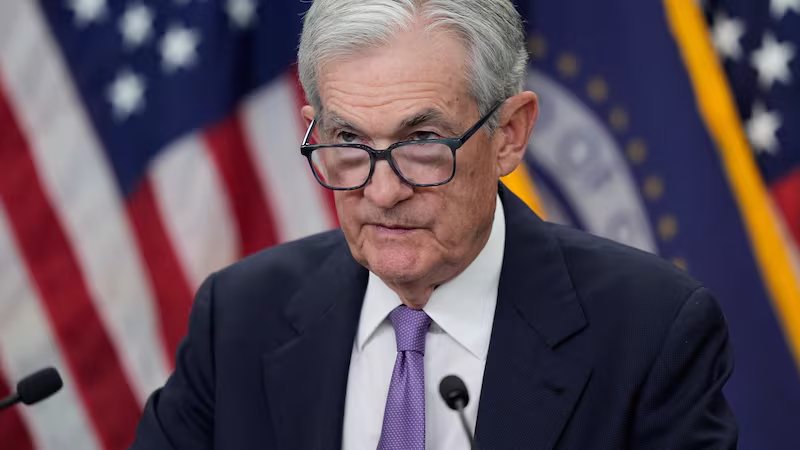
The US Federal Reserve has announced a 25-basis point cut to interest rates, reflecting growing concerns about economic stability and slowing growth. This decision, disclosed amid a divided stance within the Fed, is expected to impact global financial markets, borrowing costs, and investment strategies in the coming months.
Key Points :
- The Federal Reserve’s rate cut is aimed at supporting the economy in the face of mixed signals and ongoing global uncertainties.
- Analysts predict lower borrowing costs for businesses and consumers, potentially boosting investment and spending.
- Market response remains cautious, as the divided vote signals uncertainty about the future direction of US monetary policy.
- This move may have significant implications for economies worldwide; especially emerging markets closely tied to US financial flows.
For more details, read the full report:
Divided Federal Reserve cuts US interest rates by 25 basis points | The National
News
Rent Freeze in Riyadh: Perspectives on Its Impact on the Property Market

5-Year Rent Freeze – Preliminary Views
The announcement of a five-year rent freeze came as unanticipated news to most stakeholders operating in the Riyadh market.
Whilst residential tenants may breathe a sigh of relief, investors, developers, and commercial tenants are taking stock — assessing potential impacts on portfolios, projects, and businesses.
Although it is too early to form conclusions, as more details are expected to emerge in the days ahead, some potential property-level impacts can be inferred from the experiences of other geographies and prevailing market views:
Cap Rates: While an increase in yield expectations — and consequently lower valuations — is considered the most obvious impact given restrictions on rental growth, the effect will ultimately depend on asset-level dynamics. A declining interest rate environment may provide some cushion.
Build-to-Sell: Investors are likely to redirect capital toward residential build-to-sell opportunities, in tandem with the White Land Tax, thereby boosting supply, moderating price growth, and softening rents.
Shorter Leases: Landlords may adopt a preference for shorter-term leases, as tenant turnover captures market rental growth. Conversely, commercial tenants typically seek longer-term leases to enable better planning.
Asset Management: With top-line growth restricted, managing costs and introducing service charges may become necessary. Deferred maintenance could also emerge as a real risk.
While the rent freeze will help tenants reduce occupancy costs and reinvest capital into their core businesses — thereby boosting overall economic activity — some unintended consequences for landlords and developers will need to be closely monitored. Success is likely to be found in proactive asset management strategies and well-structured investment deals.